Follow the reluctant adventures in the life of a Welsh astrophysicist sent around the world for some reason, wherein I photograph potatoes and destroy galaxies in the name of science. And don't forget about my website, www.rhysy.net


Tuesday, 12 July 2016

I Don't Own You


We've gone and got ourselves into a right pickle. Anyone holding even a single non-mainstream opinion is derided as an "anti-intellectual", while anyone who ever says "anti-intellectual" is seen as part of the "establishment" or worse, the "elite", a snob bent on telling people what to think in order to keep the plebs/old people/the great unwashed in line. This was merely annoying when this was confined to the criticism of so-called "ivory tower" scientists, but as it strays into politics we might - potentially - be witnessing the development of something very dangerous.


A little while back I wrote about the supposed historical conflict between science and religion. It's not entirely unfounded, but the extent to which it actually happened appears to have been vastly exaggerated. It is, with certainty, not necessary that such a conflict occur, provided science and religion mind their own business. I also referenced this interesting article, which has it that most people believing non-mainstream ideas actually try and use science to support their claims, which is clearly much more subtle and complicated than a simple anti-science crusade. And I also gave a personal example of two very intelligent staunchly pro-science people, who both hold some non-mainstream opinions, getting quite cross with each other.

This would all suggest that maybe things are not as bad as those proclaiming widespread anti-intellectualism would have it. The "flaw of averages" means that hardly anyone believes in all mainstream ideas; human beings being fallible and irrational creatures, it's scarcely an extrapolation to say that everyone believes at least some things which just aren't true. To take this to extremes, not all Creationists are hell-bent on taking down the entire scientific establishment - a few are actually entirely respectable radio astronomers. That certainly came as a shock to me, but it's quite true - they treat the whole thing as a sort of cute intellectual exercise.

If your basis for "anti-intellectualism" is, "anyone who disagrees with the consensus on anything", then we're all anti-intellectuals. And yet... if you're going to say things like, "we've had enough of experts", or "experts said the Titanic was unsinkable" to justify your ideological beliefs... then yes, you are being anti-intellectual - the vast majority of Six Day Creationists do seem to be willing science deniers; Flat Earthers are science deniers by definition. It is foolishness indeed to pretend this never happens. It can be very unpleasant to say it, but some people are genuinely very stupid and/or not only refuse to think rationally, but wish everyone else would refuse to as well. The truth can often be the most offensive thing of all.
The consensus does get it wrong, obviously. But it's an extreme Nirvana fallacy to say that "because you got this one thing wrong, all these other things are probably wrong too". Literally everyone in the entire world is wrong about some things - sometimes for good reasons and sometimes for bad ones - so it's completely unrealistic to expect that the "wisdom of crowds" (people arriving at independent conclusions) will always produce the right answer, even if it had all the relevant facts. You can harp on about the Titanic or continental drift as much as you like, but the fact is that the vast majority of ideas which seem like utter bollocks are indeed just utter bollocks.

The comments on the above tweet make it clear that, unsurprisingly, people don't like being told what to think, and they especially don't like having their own stupidity pointed out to them. E.g., "Rhetoric like this is why so few were swayed by your arguments. You are self defeating." And this is indeed one of the biggest problems I have with Neil deGrasse Tyson : he talks the talk (science is about getting things wrong) but he can't walk the walk (he wouldn't admit he got anything wrong if it hit him with a hammer). The attitude of some science popularisers* succeeds for precisely the same reason that demagogues like Donald Drumpf succeed : they're uncompromising men who are easy to admire, using the same old "us versus them" rhetoric which has been fabulously, destructively successful for so much of human history.

* This is a somewhat subjective opinion, however, as certainly not everyone gets the same impression as NGT as I do - a smug, supercilious, arrogant little SOB with the charisma of an erudite yet pedantic turnip.

And yet, for all that, the problem is that the "anti-intellectualism" cry seems to me to be a response to some really batshit crazy extreme positions - positions so extreme that normal rules do not apply. Like the Flat Earth. Now, I like to think I'm a patient person. Some of my art takes months, some papers take years. Yet when presented with the notion that the Earth is flat or that vaccines cause your genitals to drop off or your cat to grow sixteen extra heads, I give up. Some people don't - they maintain the pure evidence-based arguments with saintly devotion to the cause of logic, gentle persuasion, and reason. Yet even these people are not enough to convince some hardliners, who seem to earnestly believe that knowledge is no match for wilful ignorance. And then we end up in this horrible, ghastly, bias spiral in which anyone who holds some opinion is seen as irrecoverably biased, an idiot not worth arguing with.

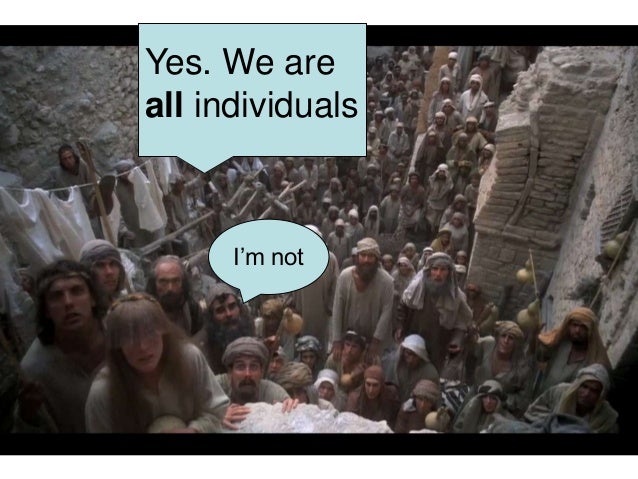
"Not a late paleolithic era supporter are you ? Think you're better than me ? I'll have you, you scrawny twat !"
The bias spiral is one of the most successful of the bullshitting techniques of modern politics and pseudoscience alike. Can't win against the objective facts ? Then don't try - attack the nature of the arguments, which are far more subjective and therefore much harder for your opponents to debunk. If not strictly impossible to refute, debating the nature of the argument at least shifts the debate away from those pesky facts. It's good to understand popular fallacies, but as a general rule, when the argument shifts to identifying what fallacy your opponent is using, everyone has lost.

I don't want to tell you what to think. I certainly don't want to tell you what to do. I just want most people to agree, most of the time, that objectively measurable facts are indeed correct. I don't want to enforce a false consensus (in fact a consensus is stronger, not weaker, when there are dissenting voices because a consensus arises through considering alternatives), I don't even want to stop people from questioning scientific findings - but I draw the line when legitimate skepticism (the basis of science) shifts to paranoid denial. And I'm sorry, but if you're going to go off spouting gibberish about the Earth being flat they said Galileo was crazy hahahah look at my pie chart, then I for one can't help but call you an idiot.

Well... actually, in another world, perhaps I could. If we were limited to purely academic disputes with zero real-life consequences, this might all be fun and games - but being able to think rationally matters in politics as much as science. If your voting rights are going to affect me, then I want to know that you're capable of making at least half-sensible choices. Moreover, were we still limited to slowly writing letters, I might have the time to write back saying (in more polite terms) that you just have an idiotic belief - which is altogether different from saying you're an idiot, because everyone's got some idiotic beliefs. Unfortunately we've got this wonderful thing called "the internet", which is an incredibly powerful mechanism for sharing pictures of kitties.


Like almost anything of great power, the internet is capable of being used for both virtuous and nefarious purposes. Cat pictures can tell us profound truths...


... or outright lies.


The internet is a great and terrible thing. Everyone can have their say, every opinion counts, every voice can be heard. The problem is that even the true idiots get their say as loudly as people who've studied issues for decades, expert opinion is not given any extra weight, every voice must be heard no matter how utterly stupid it is. Simply by tail-end-of-the-Gaussian effects (a small fraction of any population always believe arbitrarily ridiculous things), we now have to listen to people who really aren't worth listening to, as though open-mindedness were always a virtue in any circumstance. It isn't. And depending on who you believe, we must either not allow anyone to say anything offensive at all, or we have to allow people to make death threats for any reason (woe betide any who say we should find a middle ground between the two !); perhaps most dangerously of all we can't call out people's stupidity or disrespect them because "that's offensive" - even when what they're saying is dangerous and deserves to be shot down. The democratic process is being perverted to an absurd absolute.


The sheer mass of misinformation on the interent forces quick responses. If you ever try moderating a large community, you'll quickly find that fighting the tide of pseudoscience is like Canute's (deliberately) vainglorious attempt to hold back the sea. Would I like to try and respond in detail to absolutely every non-mainstream idea ? You betcha. The problem is that if I did that I would have literally no time left at all to do anything else whatsoever, including pooping. And I need to poop. So that demands the wholly unsatisfactory, "I'm sorry we don't allow that here" response, which people naturally object to.

Small wonder that if you see me dismissing your theory out of hand you might see me as "biased" or a "true believer" - but you're not seeing the full picture. You're not seeing the dozens of other, completely different theories about the exact same topic I could also spend hours and hours refuting. Would you choose to do this in your free time voluntarily ? A few saintly individuals would, and I commend them, but it obviously isn't for everyone.
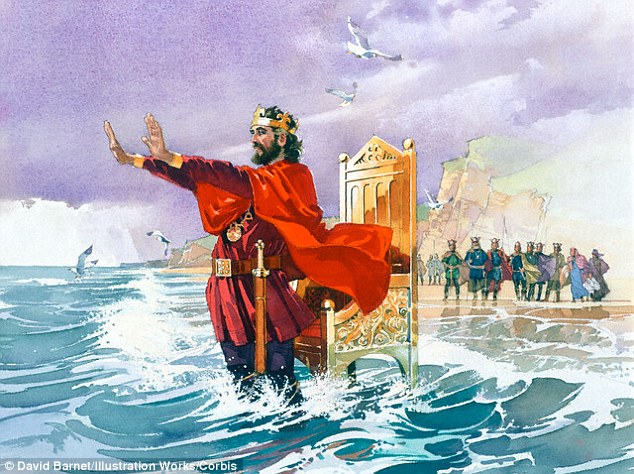
Entropy, the sea, pseudoscience... poor Canute.
But would you really see me as a member of the "elite" ? Or at least seeing myself as a member of the elite, which is just as bad ? Because that's just so neeeeeeaarrggooooooaaaaargh level of wrong that words fail me. Saying, "the opinion of a heart surgeon should count for more than the opinion of an eel catcher when it comes to doing heart surgery" is not elitist. Unless, of course, that heart surgeon also professes an intimate knowledge of eel-catching despite having caught exactly zero eels. Such intellectual snobbery does exist, but my impression is that this behaviour is now assumed (by some) to be the case for any and all academic experts.

Professional athletes don't have this problem. No-one describes an Olympian as an "elite" with the implication that they're some sort of snob. Yet anyone who's ever been seen as a nerd in school will recognise this as the more adult version of "swot" or "geek" or indeed "nerd", with "intellectual" itself having the same connotations in some quarters. "Oh, he thinks he's better than us !" they say, after repeated insults on the basis of a presumed greater intelligence*. It's nothing more than the politics of the schoolyard, writ large.

* It's actually, in my opinion, nothing of the sort - people are just good at solving different sorts of problems. I think we'd all be a lot happier if we stopped assuming that people good at astrophysics must know the slightest thing about climate change.

Fortunately, public perception of experts may not be as bad as it may appear if you spend much time on the internet / verbal diarrhoea dispensation network, where the anti-intellectuals are given an undeservedly loud voice. In at least some circumstances, experts are still more trusted than any other group. Maybe the reason that public opinion contrasts strongly with the expert consensus is because the expert voice is drowned by politicians, media commentators, and other enthusiastic but malevolent interest group. The media may over-report experts who go against the consensus in an entirely legitimate (but extreme) effort at impartiality, or, far worse than that, because of inherent media bias. Hence trust in experts may not be all that low, it's just that the experts aren't being reported accurately or completely.

Yet clearly if a government minister can say, "we've had enough of experts", we've got a real problem on our hands - even if that remark wasn't widely appreciated, the fact that he said it at all is a cause for concern. All social groups have their stigmas - models are seen as dumb bimbos, pop stars are seen as wildly hedonistic socialites, golfers are seen as boring, experts are seen as aloof or even hostile. As this very nice article from The Independent puts it (slightly edited here) :
In a study published in 2015... The authors argue that for an expert to be high on trustworthiness they need three characteristics: expertise, integrity and benevolence. For us to rate a person as a trustworthy expert they need to know their information, to be honest and to be good-hearted. This is problematic when we live in a world in which the idea persists that experts are mad geniuses with no moral compass who constantly need their egos stroked. As it turns out, most of us don’t trust people we believe to be narcissistic psychopathic geniuses. 
When experts talk, they often fill the air with complicated words and unintelligible acronyms. Experts seem to want non-experts to rise to their level of sophistication, rather than approaching non-experts with appropriate language... Using words and phrases that most people don’t understand in everyday conversation and through the media can be seen as an elitist attempt to assert intellectual dominance. In this time of crisis and expert shaming, we need to stop blaming the public for not listening to experts and give a stern talking to the experts themselves.
I hope that's true, because if it is, the problem is relatively easy to address. To re-iterate, do you really see me as an elitist snob ? I hope not. If the problem is that experts aren't seen as being nice : well, we are ! We're very nice ! Look how nice we are !

The back of the shirt reads, in large pink friendly letters, "ARECIBO : THAT'S THE PLACE THAT I'M REPPIN'"

Here I am, hard at work suppressing the plebs.
LOOK AT MY CUTE PUPPY, DAMMIT !
OK, if not me, then what about this guy ? Are you seriously going to look me in the eye and tell me Professor Ethan Siegel is any kind of a snob, and if you are, WTF is wrong with you ? Do you think the blue spandex angel costume company is a tool of oppression ?


That said, and notwithstanding the vast amount of excellent outreach material available on the internet (though it's not always easy to find), experts have long tried to main an air of cool, authoritarian detachment. There's a certain logic to this, the idea being to convey an impression of total objectivity, unhindered by the emotional passions that sway the rest of us. In some cases, that's probably still a good thing - I'm not sure I'd want a surgeon to go around dressed in a skin-tight bright blue angel costume. But then with doctors and nurses and the other healthcare professionals, benevolence is an intrinsic part of the job, everyone already knows they fundamentally care about people. Not so with astrophysics, climate science, economics or politics. Consequently, attempting to appear detached can all too easily make such experts appear completely detached : an unfeeling robot, from which the step to "monster" is all too small.

So certainly experts themselves are partially to blame when the public refuse to accept even very strong consensuses. But the media also have to accept responsibility when they give undue weight to minority viewpoints. Yes, fringe ideas do deserve to be heard - but not 50% of the time if only 3% of the experts think that's a better explanation. In the case of climate science in particular, journalists need to take a much bigger step back and let the experts speak directly to the public - too often, journalists are given far more screen time than the scientists. There are certainly experts out there who are great at public communication, but in the vast wastes of the internet their voice is not always heard. The mainstream media is still hugely important.

This "nice friendly experts" approach appears to be very successful - few people (except the vocal minority on the internet) seem to be genuinely distrustful of astronomers. Then again no-one has any reason to distrust astronomers to start with, but there's pretty good evidence that this approach could also work for economists and politicians. Oh, irony of ironies, look no further than Nigel "bigoted idiot with a pint" Farage ! He's worth about $3 million, yet rarely is he accused of the elitist snobbery that plagues wealthy Tory politicians. Boris Johnson's tactic is very different but no less successful : he doesn't hide his Classical education, but he deflects it by deliberately playing the buffoon, a sort of political version of the harmless absent-minded scientist, clearly very intelligent but with a weakness and therefore not trying to oppress anyone at all.

As David Cameron correctly put it, "If any other politician anywhere in the world was stuck on a zip-wire it would be a disaster. For Boris, it's an absolute triumph." Only someone with a very carefully cultivated image of buffoonery can get away with this.
Farage and Johnson go to extremes. But most other politicans and economists go to the exact opposite extreme, trying to appear as consummate professionals. Politicians are intensely public figures so it's understandable that they don't want to expose one whit more of their private lives than they have to. And I'm not sure I particularly want the Governor of the Bank of England to appear as a beer-drinking blue angel stuck on a zipline... but surely, a more moderate level of "I am not a robot" behaviour is possible. Bernie Sanders and Jeremy Corbyn retain immense popularity in some sectors (the latter not with me) by simply being who they are, even if who they are are middle-aged men who like gardening. That's hardly a recipe one would think would guarantee popularity. The thing is that the rest of the political establishment appear so incredibly corporate that almost anything seems like a better alternative.

Ordinary politicians don't have to go to the extremes of Boris or Nigel, but they do need to make more of an effort to appear less as corporate drones. The media have also got to stop dragging them over the coals over every minor infraction, yet hold them fully to account when they say something genuinely offensive. It's not an easy circle to square.
Trust in experts is not about keeping the plebs in line or the Establishment fat-cats in place. It's about unqualified people being able to make rational choices without the years of training needed to establish real expertise : because all experts have to do this outside their specialist area too. Expertise, in many fields, is not the same as authority - but it's a damn sight better than blind ignorance.

I believe a world run purely by experts (essentially Plato's Republic) would be an immensely poorer place, not least because self-determination is (by Plato's own extremely lengthy admission) the essence of justice, and it's important to let people make their own mistakes... but like all things, this is only true to an extent. You want to allow children to scrape their knees, you don't want them to fall off the edge of a cliff. A world based purely on evidence and rational thinking would not only be impossible (because not every decision can or should be made rationally), but it would also be monstrous because people have come up with all sorts of crazy ideas about what logic and evidence suggest.

I don't want to tell anyone what to think. I just think we should work towards a world in which expert advice counts for more than it does now, where evidence plays more of a role, where the ability to think rationally is celebrated but not worshipped. In that way, I think, we'd have a world with far fewer major mistakes and much less angry controversy over the big decisions.

I know this isn't as popular as the uncompromising ideas that we should all have three rounds of voting to decide what to eat for breakfast, or insist that that no-one be allowed within 50 ft of a can opener without a Master's degree in civil engineering. Moderate ideas seldom have the emotional appeal of simpler, but usually wrong, more extreme messages. But as Western politics feels increasingly polarised, it's moderate voices that are needed - fighting extremism with extremism only drives the wedge in further.

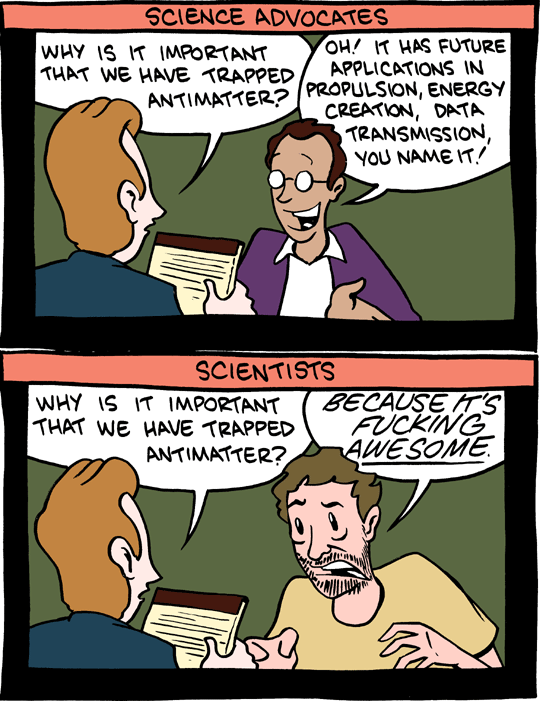
The notion that are experts are elitist snobs needs to be nipped in the bud, but that can't happen without a multifold effort. A few experts, it's true, need to get over themselves and realise that they're not fundamentally better people than anyone else. More generally, experts have to learn not merely to tolerate but to embrace outreach, and its needs to be done by actual "practising" experts, not "science advocates" or "economic advocates" or whoever - but people who actually understand the nitty-gritty details. This is true for both the institutions who want to promote themselves and the media who want to consult a friendly expert. Generic "advocates" (or experts in another field) look very silly and undermine confidence in all specialists when they say something later revealed to be inaccurate by a true expert. Solution ? Stop relying on advocates ! Train more experts to talk directly to the public - it's not that difficult ! Don't say, "we'll get this professional science communicator to talk about blah blah blah" - that's fine for very basic stuff, but not for the complex issues we face today. Instead, get an actual expert in blah blah blah to come and talk about it. I think you'll find that in that situation, the idea of any kind of widespread, snobbish elite will rapidly disappear.

Tuesday, 5 July 2016

"Vote Remain" In Terms Daily Mail Readers Could Understand


This idea comes from a nice lady on the internet by the name of Ruth McKay, who writes :
We needed a few tub thumping, fist waving, knee jerking bigots on our side, spreading fear and paranoia - people'd have listened to that. Our insistence on reason and facts (well, mostly) is the cause of this monstrous fiasco. Reason and facts?! I mean, honestly, you couldn't make it up. 
Well now there's an interesting idea. Can we redraft the Remain campaign in terms that Daily Mail readers will understand ? That is, nationalism must run rampant, a stench of xenophobia must permeate everything (occasionally flirting with abject racism) facts must be chosen selectively or not at all, ideology must always prevail, and anecdotes must always win over statistics. I find it bizarre that the Remain campaign was branded, "Project Fear" by the Leave group, even while they themselves painted foreigners as hordes of terrorist benefit cheats looking to steal our jobs. So fear of the mythical other must dominate over fear for ourselves. And there have to be occasional token gestures of moderation just so people can say, "obviously it's more complicated than simple racism", thus missing the point catastrophically.

Some ideas are just too perverse not to try, so here goes. I will focus on the three main issues of the real campaign : foreigners, sovereignty, and expense. But not necessarily in that order. Let us begin with a headline based on the excellent Daily Mail-omatic. It should go without saying, but for the love of all things holy don't bother to fact-check this. It is very deliberately a mixture of facts, bullshit, outright lies, and stuff I just plain made up of the top of my head.


As Westminster fat cats plan to hurt the decent, hard-working people of this country, we ask :

WILL LEAVING THE E.U. GIVE BRITAIN'S SWANS CANCER ?

Ministers are secretly plotting to take the U.K. OUT of Europe and plunge the economy into an "unprecedented" recession, the Mail can reveal.

Sources close to the Prime Minister confirmed that left-wing bureaucrats are determined to prevent the U.K. from receiving any of our hard-earned European cash and ending our special exemptions that give us unique power and influence on the Continent. The move is likely to cost the British economy tens of billions of pounds, take the nanny state to terrifying new levels, open the floodgates to illegal immigrants, and strike a crippling blow to British sovereignty, the Mail understands.

The political correctness of the Westminster establishment looks set to threaten our country as never before. Ministers are reported to believe that the U.K. is "stealing" billions of pounds each year from Europe, despite the fact that we are fully entitled to every penny of that hard-earned cash under clear regulations the British government imposed on Brussels. Europe willingly accepted economic integration as the price for our membership, but now Westminster cronies are using populist rhetoric to convince voters that our great country is nothing more than a European "parasite".

In yet another example of the loony left trying to have their cake and eat it, other ministers are reported to believe that the E.U. is a "luxury" that this, the world's fifth largest economy, supposedly cannot afford. While out-of-touch ministers bandy around figures for political point-scoring, the reality is that the £127.6 million per week that Britain takes from a grateful E.U. is essential for many hard-working British families - with most of those benefits going to the ordinary middle class. Indeed, even without accounting for the massive financial returns from E.U. membership, even our investment into Europe is far smaller than our expenditure on BEER. Once again, the so-called "facts" of the liberal experts are revealed to be paper-thin, while real people suffer as pawns in the statistical games of the bureaucrats.

In a demonstration of utter contempt for the British taxpayer, ministers have further argued that British sovereignty would, in defiance of all common sense, be somehow strengthened outside Europe. These Britain-hating liberals have no shame as they seek to withdraw our country from the world stage in the name of "European liberty".  They despise our political pre-eminence in Europe, with our unique relationship with the United States allowing us to act as a power broker for the world's economic superpowers. Our centuries-long ambition of governing Europe, which needs our guiding hand now more than ever, is threatened by our left-wing elites and a handful of snail-eating European desk jockeys. They are blind to the simple reality that Brexit would see us hand over control of the world's largest economic bloc to the cheese-eating surrender monkeys. Wellington would be spinning in his grave.

The worst lies of all told by the Leave camp concern immigration, which threatens the flow of willing European workers who would rightly prefer to see their taxes go to us rather than their own incompetent governments. Of course, we need a strong policy on immigration, but it's common sense that if we make immigration illegal, we will only have illegal immigrants. That sort of human swarm cannot be allowed to swamp our NHS and other proud public institutions. Instead we've got to keep encouraging the best and the brightest to come here and further strengthen our great country, leaving behind the dregs of society in the impoverished countries where they belong. After all, this time-honoured policy of divide and rule is what made Britain great.

We don't need "experts" to tell us that our country is stronger in Europe. Stronger politically, economically, and militarily. Our global reach is stronger than it has been in decades, and far from being mere puppets of Brussels, as the ostrich-like Euroskeptics would claim, if anything the situation is the other way around. This is a simple, common-sense truth the mainstream politicians would rather not talk about. Just visit an NHS hospital and see the wealth of foreign experience we've drawn to that great institution, or the huge numbers of foreign scientists at our universities - such is the sway we have over other nations.

An Independence Day, Nigel ? No sir ! That is something for lesser countries. We don't need to take our country back, because it is we who give other countries independence. It is we who govern nations that cannot govern themselves, not the other way around. No-one has taken our country from us in a thousand years, so vote Remain to keep us where we belong : a great country that others can only envy, neither ruling nor being ruled by Europe, but leading it into a bright, prosperous future where Britain wisely governs the nations of Europe. Let the French and the Germans and the rest be subject to us, not us be subject to them.

Saturday, 2 July 2016

Absolutely Not

I posted this meme a few days ago. I did not expect it to be controversial. Not in the slightest.


Granted, it's an opinion, not a measurable fact. Point conceded. But, to those who think laws should be absolute, have you gone utterly barking batshit crazy ?

Now, normally I reserve the hyperbole-laden posts for sci-fi reviews, because most people are level-headed enough to understand that I don't actually think that Battlestar Galactic is going to usher in the next apocalypse or that I'd spit in the eye of anyone who enjoys Stargate Universe. Of course I don't, and I wouldn't. Under ordinary circumstances though, I generally try and make my philosophical commentaries fairly moderate, almost by definition.

These are not normal circumstances.

Let's see... not much sleep this week... worst political crisis in living memory... 22 hours of talks in 4 days that were mostly about topics I don't understand stuck in the same room without much ventilation... too much heat... yeah, moderation can go boil its frickin' head. Hence, I may say things which I do not really entirely agree with.


What is the purpose of the law ? To prevent crime by deterrent ? To punish for the sake of punishment ? To maintain order ? To enforce certain behaviours and discourage others ? To promote the values society aspires to ? To ensure justice ? Meh, who cares. It doesn't really matter, because it is self-evident that whatever the letter of the law, the spirit of the law is far more important. Interpreting the intent of the law is obviously not easy, but unless you think the law is some sort of monster that demands continual sacrifice, embracing the idea of absolute law is to embrace cruelty. And whatever the purpose of the law is, enforcing cruelty is not something I will ever, ever, ever support.

The original meme comes from a very good episode of Star Trek : The Next Generation that was executed in a really crappy way. In the episode in question, the Edo species have achieved an incredibly dull sort of utopia in which everyone is impossibly attractive and seems to spend most of their time having sex. It's an absurdly idyllic yet dull sort of existence, not dissimilar to the far more famous Eloi of H.G. Wells. Dullness aside, everyone appears to be at a Disney-esque level of happiness, only with more sex.


The reason for this gushingly Utopian existence is the Edo's incredibly simple laws, which are not only absolute but also absolutely extreme : anything deemed bad is illegal, and the penalty for any transgression is death. The episode revolves around everyone's most hated Star Trek character (Wesley Crusher) accidentally stepping on some flowers, which is of course illegal. For some reason the crew decide not to avail themselves of this excellent opportunity to rid themselves of this jumped-up little jerk but try and negotiate for his release. Unfortunately, Captain Picard's moral sermons are ultimately successful and we have to endure a full three more seasons of Wesley's extreme smugness.


In the Edo system, ignorance of the law is no defence. Even more absurdly, even accidentally breaking the law (i.e. by tripping up and stepping on flowers) doesn't make any difference. Which means that any visitors would have to fully acquaint themselves with all of the Edo's laws to avoid running the risk of death. In the episode, neither side make much effort to understand the other's laws, otherwise the crew of the Enterprise would surely have given the "planet of the very stupid people" a hell of a wide berth. It's obvious to anyone with a lick of sense that stepping on flowers isn't as bad as killing babies, so why would you expect the same punishment for both ?

One of my all-time favourite memes explains things rather well :


True, in the middle it can be hard to distinguish one colour from another. But it is not at all hard to distinguish red from blue, there are some things for which it's just damn blindingly obvious to anyone half-sane that red is different to blue, that some things are better than other things.

But in case even the absurdity of the Edo's laws isn't obvious to you, we can go one better. One could imagine a law which said nothing except that anyone who disobeyed that law should be exterminated. Would that be just ? Of course it wouldn't. Laws are not automatically just. Therefore, enforcing the laws absolutely does not automatically ensure justice or fairness. I can't make it any more obvious than that. Laws should be absolutely fair, but since we can't always agree on what fairness is, if you think they should be absolute then you have declared yourself morally omniscient. And that's very, very silly.

"Alright", you might say, "I can accept that these really extreme hypothetical cases*, the absolute law doesn't work. But I never meant that everyone who disagreed with me should be shot on sight. In reality, we just set different punishments for different crimes and we enforce that regardless."

* You didn't read the link about the UKIP candidate, did you ? You should.

Good try, but.... come on. If someone steals a loaf of bread from a rich* baker because they're starving and would otherwise die, does it really, really seem like justice to you to then make them pay a fine ? Even if their situation was forced upon them through no fault of their own ? What if they used to work in that very bakery but a new owner fired them because they wouldn't remove their tattoos or simply had a personality conflict ? Fining them would only keep them in the situation which drove them to poverty in the first place and is manifestly stupid.

* To my lasting dismay, people seem to continuously ignore the fact that the suffering of the rich is almost always far, far less than those at the bottom.

Or consider something more serious. Suppose our miscreant was routinely pickpocketing not to survive but just because they enjoyed the extra cash, occasionally straying into physical assault and burglary. This, on the face of it, is not a nice person.... but, what if they only do that because it's the only life they've ever known, if they've been brought up assuming this is correct way to live ? If such a person realises the error of their ways and shows genuine repentance, should you really treat them in exactly the same way as someone who shows no remorse and insults their victims in court ?
These are all, essentially, trolley problems. Yes, there are a few extreme cases in the real world where things are cut and dried, but the vast majority are far too complex for the law to make provision for all of them - without becoming so convoluted that no-one would be capable of understanding it. Not to mention various unintended consequences of laws being used for purposes for which they were never originally intended. Laws sometimes endure for centuries, others are fleeting.

Again, making laws absolute in any way is only sensible if you're omniscient, which, I'm sorry to say, you're not. The only reasonable question becomes not whether laws should be absolute, because that's just stupid, but how rigorously they should be enforced and what powers judges should be given over sentencing. Of course we must also guard against capricious judges making unfair decisions that favour those with power (laws have to be more than guidelines), but that is no reason for the wanton cruelty that moral absolutism would impose. What the hell gives you the right to just ignore any extenuating circumstances ? Nothing, that's what.

Which brings us, inevitably, to Brexit. I've made my case that we should try in some way to avoid actually doing this very stupid thing despite the result of the referendum. To recap, the arguments for the latter are as follows :

  • The referendum was not legally binding, only advisory - so trying to apply legal absolutism in this case makes no sense anyway.
  • The result will have far-reaching ramifications for decades to come, and should not be decided by a small minority (mainly of older voters who won't have to live with the consequences as long as the rest of us).
  • The Leave campaign was based on lies. OK, political campaigns are often based on lies, but rarely are they of this magnitude or exposed this brazenly.
  • Voting for a course of action which will objectively lead to harm makes as much sense as running a poll to decide if owls exist.
  • Accordingly, an as-yet undetermined number of voters appear to have changed their minds, as well they should when presented with new evidence - the result may no longer reflect the will of the people at all, and should we really let such a major decision fall to such transient whims ?
  • There are precedents for a such a move so it is not inconsistent with the established democratic process, even leaving aside that Parliament has every democratic right to ignore it. Like it or not, we don't have a direct democracy.

So far, all this has been met with by those who disagree is a scream of, "WILL OF THE PEOPLE ! WELCOME TO DEMOCRACY ! YOU DON'T GET TO CHANGE THE RESULT JUST BECAUSE YOU DON'T LIKE IT !"

Firstly, when have you ever heard me previously saying, "I don't like this result, we should ignore it ?". Answer : you haven't, because I've never said that even when things happened that I didn't like. But there are some things which are for all intents and purposes objectively bad, and it's those I have a problem with. It has nothing whatsoever to do with what I like, we're not talking about The Force Awakens here. I'm not going to argue that aspect, just watch the goddamn news already.

And anyway, in our society we damn well do get provision to change results we don't like. We are free to protest for (almost) whatever course of action we want. You may not want a second referendum or a general election or for Parliament to ignore the result, but I do. I am free to campaign for these things just as you are free to campaign against me.

When did the right to protest become undemocratic, pray tell ?
Secondly, the points I made quite specifically address the "will of the people" thing. At best, we don't know if it's the will of the people or not. Currently the opinion polls - like just about everything else right now - are conflicted. True, at some point we do have to make a decision and stick to it, but isn't it prudent that this extremely important decision be made on the basis of a substantial majority, not a potentially transient minority ?

Thirdly, I know what a democracy is, thank you so very much, and I see absolutely no reason whatsoever why this non-binding vote has to be treated as an absurd absolute. "We must jump into the volcano, we voted for it !" No you bloody mustn't - or if you must, don't you dare drag me along with you. If you really believe that a group vote to jump into a volcano must be binding even though the rules said it wasn't binding, then you are an idiot and I despise you. Natural selection clearly has its work cut out for the foreseeable future.

The only counter argument to this has been that "you can't simplify democracy like that". Really ? Oh, I think you'll find that I can. Apart from the magnitude of it, what exactly is wrong with my analogy ? And why the hell can't I (supposedly) simplify democracy, but you're apparently allowed to reduce it to a batshit crazy absolute extreme in which any non-binding vote must be considered sacrosanct no matter the absurdity of the result ? Aaaaaarrrghhhh !

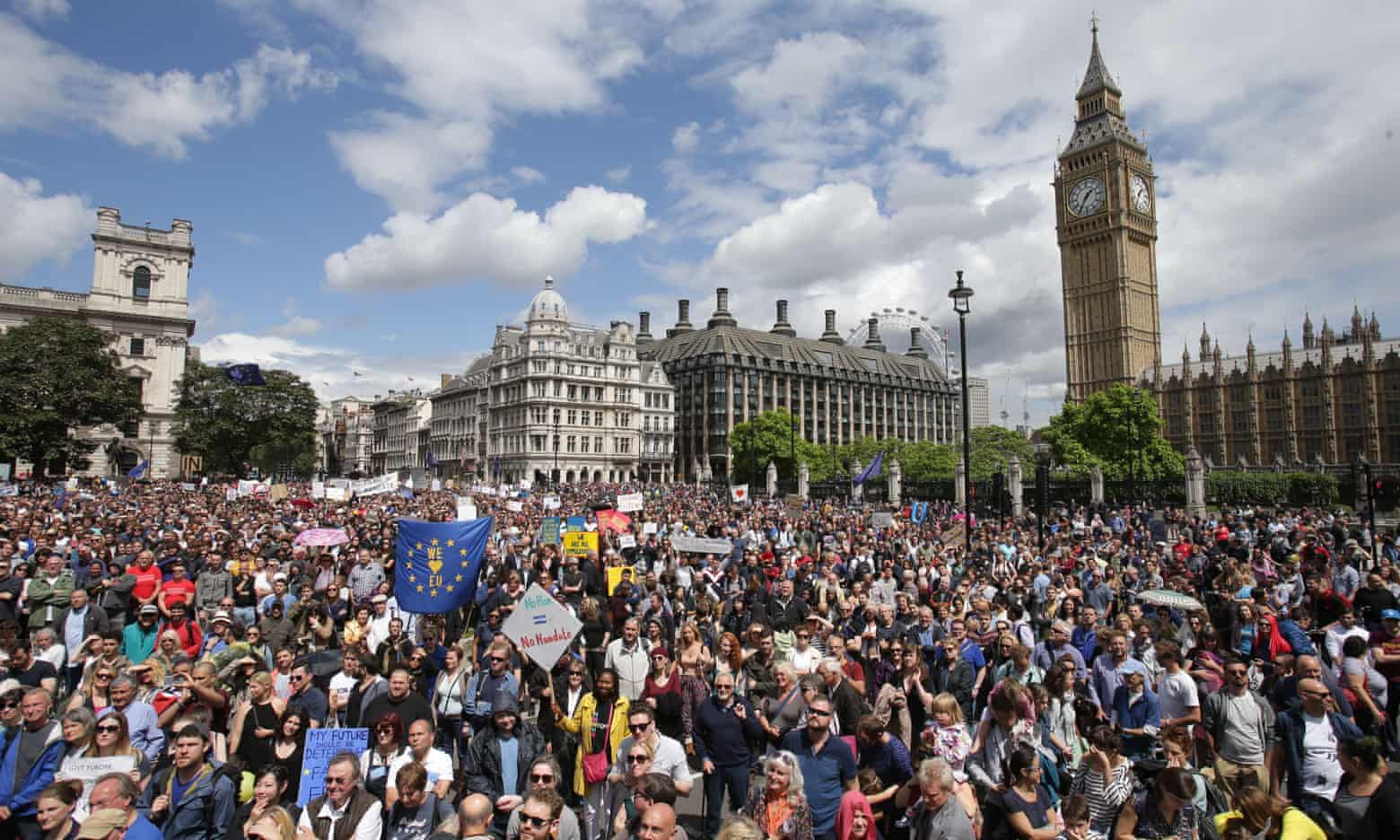
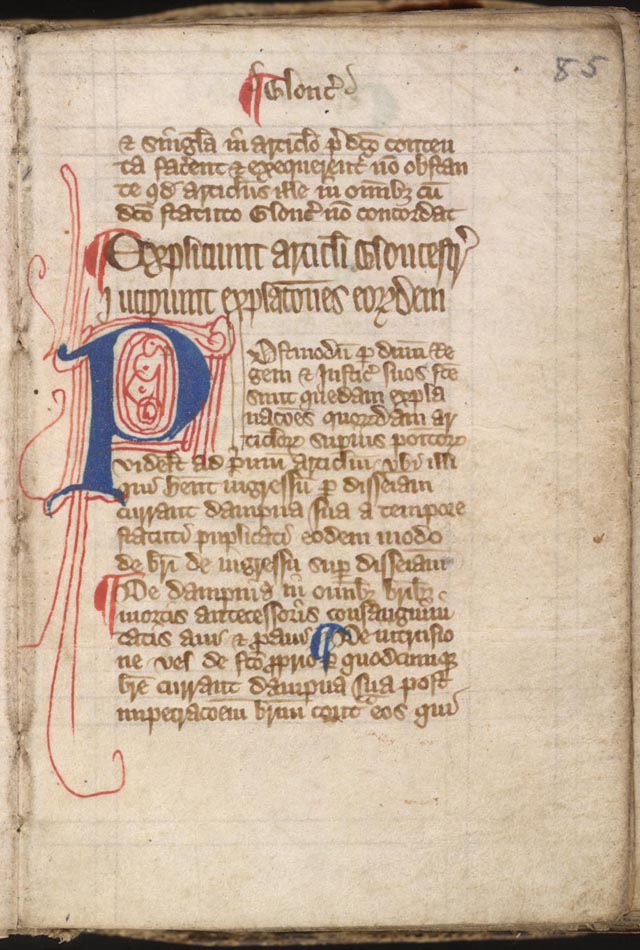
The Magna Carta should be held no more sacred than any other text. It is totally absurd to define your laws as absolute and inviolable by a document written in another era with circumstances its writers could not possibly foresee. Rather than guaranteeing freedoms, it could do the exact opposite. Only constant vigilance and self-examination have any chance of keeping society healthy.

The ideal democracy is not one in which everyone gets to vote on every issue. It's one which everyone gets to vote on every issue and is also an informed expert about everything. Plato's Republic took that idea further, postulating that only the experts at ruling should be allowed to rule. All of these notions can't and don't exist in the real world. Representative democracy is a sort of hybrid. Most decisions (but not all) require a vote, which are almost always done by people we choose to vote for us. Those representatives aren't necessarily experts, but we would hope that since it's their job to understand what's being voted on, they are at least more expert than the majority for most of the time.

Occasionally though, we do make choices which are far closer to direct democracy. The problem is that most people are neither informed nor experts. They're not even responsible - they even vote on entirely different issues to the one put before them, sometimes out of protest, sometimes out of pig-headedness. No system, not even democracy, can function if enough people decide not to play by its rules.


What can be done about this ? Well, we can stop having referendums since people just don't know how to handle them. If we want them back, I suggest gradually trialling them on much more local levels for minor decisions first, so that people accept that what they decide has, well, you know, actual freakin' consequences before we let them play with the big decisions. Then, we've got to reform the education system and, equally importantly, the way the media are regulated. We could also think about requiring qualifications for ministerial positions and addressing the fundamental purpose of work, so that people actually have time to research issues properly. We will not get a perfect solution, but we might get one a damn sight better than the one we've got.

In the meantime, if you want to stop Brexit, keep exercising your democratic right to protest. Keep signing petitions. Keep writing letters to your local representatives telling them to use their democratic right to veto the non-binding referendum result. Stall for time to delay Article 50. Keep reminding people that there is nothing, nothing, nothing remotely undemocratic whatsoever about people changing their minds. Direct democracy got us into this mess, representative democracy may yet get us out of it.

Sunday, 26 June 2016

An Open Letter To My Local MP

EDIT : It was pointed out that this is a bit long so might not actually get read. A shorter version is below.

Dear Mr Williams,

I am writing to ask you to consider advocating in the House of Commons that Article 50 of the Lisbon Treaty should not be invoked by the current or future Prime Minister, without at least a full public consultation. I am an expatriate scientist currently living in the Czech Republic. Cardiff North was my home for 27 years and it remains my permanent residence. Cardiff University benefits directly and substantially from E.U. funding which may be impossible to replace in the event of Brexit, and scientists such as myself profit enormously from the freedom of movement provided by the E.U. Modern scientific practise would suffer immeasurably without this freedom. Thus, I have a vested personal and professional interest in preventing a Brexit.

It has become abundantly clear that many of the so-called "negative" warnings of the Remain camp were entirely accurate (for example the value of the pound has already dropped dramatically), while the Leave campaign consisted of outright lies (that immigration could be cut and that there would be an extra £350 million per week for the NHS) and vague, undefined promises that we could either find unspecified replacements for the E.U.'s many benefits, or simply renegotiate them from outside the E.U. The Leave camp themselves have admitted these mistakes, which were major parts of their campaign.

An e-petition has been created calling for a change in the rules of the referendum so that a second referendum would be required in the result of a narrow vote. Ironically the instigator of the petition was a Leave voter concerned that the Remain victory would be narrow and indecisive, but nonetheless it has now attracted over 3.3 million signatures at the time of writing. This makes it by far the most successful e-petition of the UK Parliament and represents about 10% of those who voted in the referendum. It is not clear how many of the signatories originally voted Remain and how many voted to leave but have since changed their minds, given the damage visibly being done to the UK following the vote. Therefore, the most sensible course of action is to (at the very least) delay implementation of Article 50 until a proper assessment of the situation can be made, possibly but not necessarily resulting in a second referendum.

It may be fairly argued that asking the public to vote repeatedly on an issue (or Parliament simply ignoring the result) because one side does not like the outcome is undemocratic. However, that is not necessarily the case, as I will try to argue.

First, the referendum was not legally binding and the result was very close. This is a decision of major importance with profound consequences that will last not for a few years as in a general election, but for decades. Membership of the E.U. is not something that can be routinely renegotiated on a whim, so the result ought to be decisive if we are to change course. It was a serious error that this was not included in the terms of the original referendum.

Second, the petition for a second referendum has already attracted more votes than the margin by which Leave won. If nothing else, some attempt should be made to estimate how many of those originally voted for Leave but have now changed their minds.

Third, it is clear that lies formed an important part of the Leave campaign, thus making the choice inherently undemocratic.

Fourth, voting for facts makes no sense. Politics may be a far more slippery arena than science, where opinion is more prevalent than fact, but even so it does not escape factual reality entirely. It is a demonstrable fact that leaving the E.U. is hurting the U.K., and no sane person votes for self-harm. Having been lied to and misinformed by the Leave campaigners, it is not undemocratic in the slightest to ask them to vote again (or even ignore the result) given the facts of the situation. By analogy, the American state of Indiana once almost voted to declare the value of pi to be exactly 3.2 - this would have been objectively wrong, but no-one would have complained about ignoring or repeating the vote in this case.

Fifth, this would not be entirely unprecedented. The Leave campaigners explicitly stated that they would continue to push for a second referendum in a result this close. Even more pertinently, the E.U. itself had Ireland conduct a second referendum on the Lisbon Treaty after Ireland initially rejected it. Considering to hold a second vote in the event that people have changed their minds based on the evidence is not the slightest bit undemocratic. Rather, seeking to avoid the years of turmoil that Brexit would ensure is the only responsible course of action possible in our representative democracy.

With kind regards,

Rhys Taylor


UPDATE : Here's a somewhat shorter version that stands more chance of being read.

Dear Mr Williams,

I am writing to you, my local MP, to consider advocating with the rest of Parliament that Article 50 of the Lisbon Treaty not be invoked at the current time. I am an expat scientist originally from Cardiff currently living in the Czech Republic. Cardiff University benefits significantly from EU funding, and the scientific rewards of freedom of movement cannot be overstated. It is not known if or how these could be replaced in the event that Brexit actually occurs.

Furthermore, it has now become abundantly clear that many of the the so-called "negative" warnings of the Remain camp were entirely accurate (for example the value of the pound has already dropped dramatically), while the Leave campaign consisted of outright lies (that immigration could be cut and that there would be an extra £350 million per week for the NHS) and vague, undefined promises that we could either find unspecified replacements for the E.U.'s many benefits, or simply renegotiate them from outside the EU. The Leave camp themselves have admitted these mistakes, which were major parts of their campaign.

The fact that the damaging effects of Brexit are already being felt should give us pause to reconsider the marginal result of the referendum. An e-petition calling for a change in the rules has currently attracted over 3.5 million votes, far more than the margin by which the referendum was won. The damaging consequences are now objective facts, not predictions. The consequences of Brexit are too serious and too dangerous to allow the result to be determined by a small minority who were repeatedly misinformed throughout the campaign. As in science, so in politics : once new facts are known, it is not the slightest bit undemocratic to reconsider one's position.

Finally, this move to stall Article 50 with the possibility of a second vote is not unprecedented. Nigel Farage himself is on public record as stating that a result this narrow would require a second referendum. The EU even required Ireland to hold a second referendum after the Lisbon Treaty was initially rejected. All things considered, it seems prudent to at least hold a period of public consultation to determine if the mood of the Leave campaigners has shifted.

With kind regards,

Dr Rhys Taylor

Saturday, 25 June 2016

Are There Hats ?

So Brexit is here, and it is easily the most depressing British political event in modern times. Will it bring about the next apocalypse, a plague of locusts and the end of civilisation ? No. But it is a seriously, historically, objectively bad thing. We are all of us going to suffer for this.


Nobody knows how badly the UK economy will suffer, but suffer it most certainly will. The sudden plunge of the pound (predicted by economists) was mostly market shock at us actually doing something so stupid, but the long-term effects are harder to foresee. How we will make up the £3.4 billion science shortfall (and yes, I place that of prime importance*, science is an important driver of social progress) is unknown. The 1707 Act of Union - one of the most successful political unions in world history, which ten years ago looked rock solid - looks unlikely to last much longer. The United Kingdom will dissolve and no longer be Great Britain, there will just be Britain - a wet, gloomy island home to some unimportant, disparate countries clinging to faded visions of past glories. We shunned openness with our neighbours and turned our back on the tolerant, inclusive society we have built over many decades. Worst of all, Nigel Farage - a demonstrably racist, xenophobic, bigoted idiot - is hero of the hour. That alone terrifies me.

* But if you insist that you want more, consider the effects to the financial sector, peace in Northern Ireland, the loss of job opportunities due to restrictions on freedom of movement, and basically all those benefits from joining the E.U. that are now under threat.

None of this is hyperbole or spin, it is simply reality. You might not like it - God knows I find it appalling - but it's true anyway.

Not that Britain hasn't suffered some pretty calamitous events before, only to eventually rise again. During the Viking invasions, England was reduced to merely Wessex before it saved itself from obliteration - only for the entire thing to then be conquered by Canute, and then his empire broke up on his death, temporarily restoring the Anglo-Saxon legacy. By the time of the Norman invasion England was the wealthiest country in Europe, and despite the carnage of Norman conquest, a century later British dominions stretched from the Pyrenees to Scotland. Most of that was lost during the disastrous reign of King John, but two hundred years later and Britain looked to be on the verge of winning the whole of France - only for Henry V to die at a young age. Thus began the chaos of the Wars of the Roses... and that's all centuries before the British Empire even began.

We have a long, rich, and complicated history. We endure. We have, indeed, suffered far worse than leaving the E.U., only to eventually emerge stronger than ever before, and we will likely do so again. A germ of hope can be seen in that the vote was split by age, with the youth strongly preferring to remain (it is no exaggeration to state that this decision has been inflicted on us by racist older people who won't have to live with the consequences of their decision nearly as long as those who didn't want to leave). The problem, of course, is in the "eventually". Things do not look likely to get better anytime soon.

The medieval chronicler Gerald of Wales put it thus :
For a sensible man ought to consider that Fortune’s favour is variable and her wheel is ever turning ... the Prince must take care, and always have imprinted on his mind the fact that although the merciful Creator ... is long-suffering and patient... He is likewise severe in executing punishment and vengeance upon the stubborn and wilful, and usually begins to exact that punishment here on earth.
Or in more secular terms things might not be apocalyptic and they may indeed one day improve, but you can't escape the consequences of your actions. Brexiteers have demanded they suffer no negative consequences for an action which everybody told them would have negative consequences. This is stupidity of the highest order. And it is stupidity, because despite a goddman overwhelmingly strong consensus from the experts that Brexit would be worse than staying in the E.U., we decided to do it anyway.

It wasn't even difficult - not in the slightest degree - to see that Brexit would be disastrous. It was crystal clear and obvious. The whole point of the E.U. is economic integration with its member states, but no-one put forward a remotely sensible plan for dealing with the aftermath of exit. "Oh, but we were a great power before the E.U." doesn't matter, because we are now dependent on the E.U. and they on us. Many things are complicated, but this isn't one of them. We didn't even have a plan to deal with the poll itself : it was non-binding (a much-overlooked fact) and no constraint was placed on how strong the result needed to be for change (a really, really stupid policy given the magnitude of the issue).

My predictions for the vote were wholly wrong. Generally, the only people who ever vote in E.U. elections in Britain are the ones who hate it, hence most of our MEPs are UKIP. Polls at the start of the campaign were well in favour of remain, so I was quite confident that the majority of Brits were not stupid enough to actively choose self-harm when it came to the push. My only worry was that the sheer disinterest in Europe would again act as a filter and only those passionately opposed to it would bother voting. I was wrong. I was quite sure that the large number of undecided voters would act conservatively, as they did at the Scottish referendum, and vote for a known quantity rather than taking a massive, incalculable leap into the dark. I was wrong about that too.

But the hardline element is one thing, and the less vocal majority quite another. No doubt the internet will be awash with many more excellent analyses than mine, but still I would like to offer a few thoughts on how so many people can have effectively decided that the Earth is flat.


Media Bias


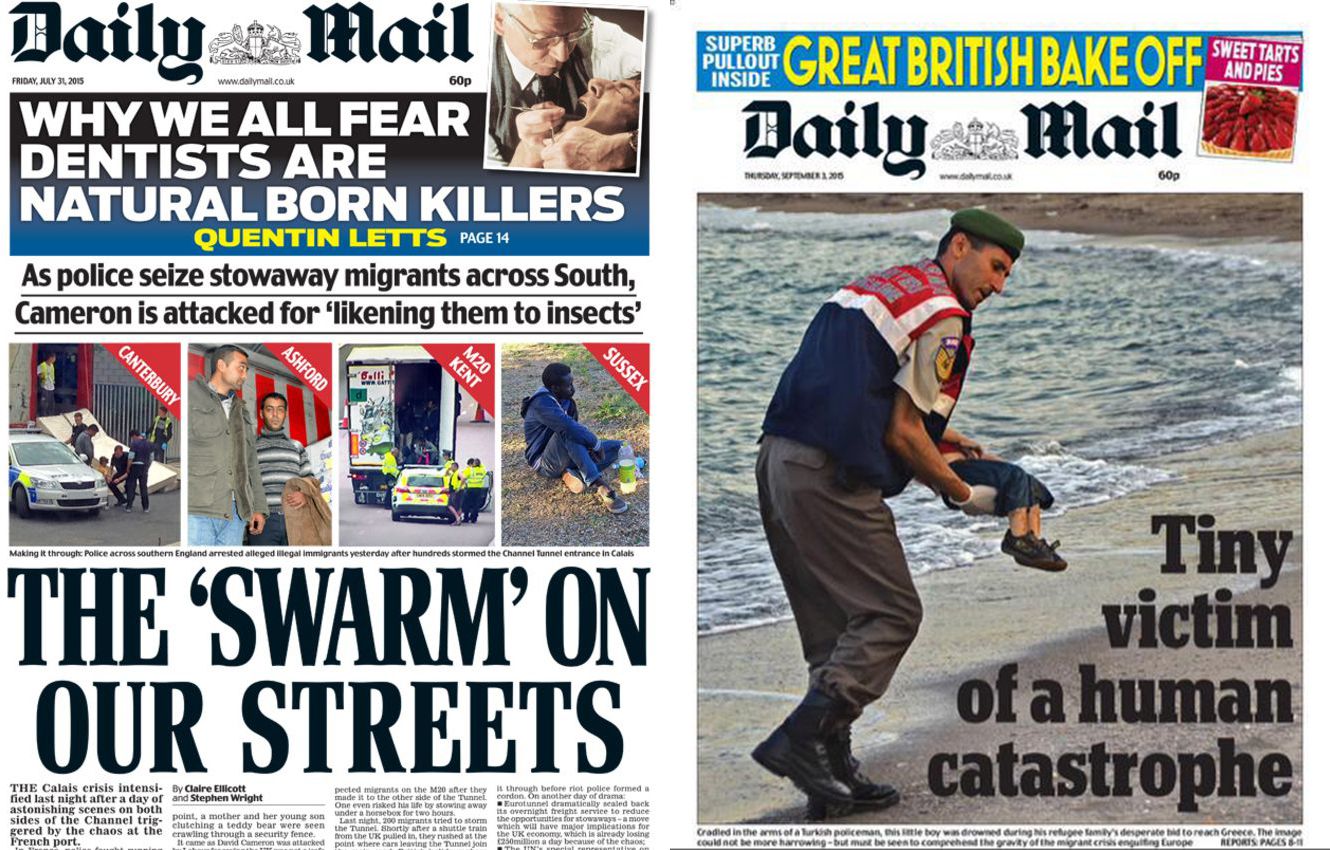
First, there is a huge media bias in the UK newspapers. On the right, the Daily Mail, The Sun, the Daily Express, The Times and The Telegraph have a combined circulation of around 4.9 million. On the left, the Daily Mirror and The Guardian have a combined circulation of just 1 million. That only rises to about 1.3 million if you add the neutral The Independent and its shorter version, the i. And while the right-wing papers tend to be overtly political (the Daily Mail especially so, which runs essentially nothing but xenophobic headlines), on the left only The Guardian is really much of a political paper these days, with the Mirror tending to be mainly focused on celebrity boobs in bikinis (oddly, its website is rather better). Accounting for this, it would be entirely fair to say that the right wing political papers are about ten times more numerous than left wing or neutral ones.

Things are, however, considerably better for the left on television, with the ostensibly neutral but actually rather left-wing BBC News being by far and away the nation's most-watched news channel. Additionally, while Sky News are somewhat to the right, they are vastly more moderate than the terrifyingly racist liars at the Daily Mail. So media bias - if you give people constantly the wrong information they can't do anything but form the wrong conclusions, even if they're very intelligent - plays a role, but it can't be the only factor.

On the other hand, even the BBC has to report what politicians say - and large numbers of Tory politicians have been singing the same dreary song about immigration for years. For some reason that I am utterly unable to comprehend, they also gave significant air time to Nigel Farage even when he was a political no-hoper. Initially, Nigel made a lot less noise about foreigners and a lot more about Brussels bureaucracy, which is a lot nicer than talking about people being scared of Romanians. But it was insidious. As support grew, the BBC were then more obliged to report on UKIP, even as what they were saying increasing tended toward far-right propaganda. And that's something that should given anyone pause for thought - OK, people can say things without being locked up, but does that really oblige major networks to report what they said ?*

*And what they said is often also a lie, or a u-turn. Farage has been caught lying about the amount of money Brexit could save for the NHS and, with truly hideous distaste, that Brexit won without a shot being fired, barely a week after pro-E.U. M.P. Jo Cox was shot dead by a man shouting, "put Britain first !".

The upshot is that even the media most biased against xenophobia and the anti-E.U. lobby still had to report this, so people were still exposed to it more often than not. And you reap what you sow. A particularly pernicious fallacy has crept in that's even more damaging - the notion that anyone who disagrees with the right must be one of those on the "loony left", which exposes the great lie of the right that they are more tolerant than the left. They are not. Time and again those on the right call for for discriminatory policies against gays, transexuals, Muslims, and basically anyone who isn't a white Christian male age 25-45. No, not everyone on the right is like this (David Cameron deserves praise for his championship of gay marriage), but enough of them are. The idea that the left is more intolerant (even though it is, of course, very far from perfect) is just so much nonsense.

Unless we actively do something about this, it's only going to get worse. The moderating influence of Scotland will soon be lifted from England, which can only lead to more Tory governments. That can only make it easier to get away with right-wing bias.


Failures of the Left

Secondly, there has been a chronic failure of the left to properly address immigration. This started with Ed Milliband, who instead of championing the virtues of immigration decided to try and play the other side at their own game. This was a disaster, because no-one really believed that Labour either could or would enact a policy that restricted immigration. And I don't want that policy, I think it would be useless and divisive. I want Labour to welcome and stand up for minorities, not restrict their access.

Then again, we could have had the proper, grown-up debate about immigration that Nigel Farage "wanted" if he hadn't behaved like such an absolute tosser. If you want a sensible debate, you keep it entirely about population. That's all. You do not talk about foreign criminals or wealth or culture, because those things inevitably head south very quickly. As with all discrimination, you set one law for everyone and if people can't abide by it then tough on them. If that means their cultural values lead them to being criminalised, then they'd better learn to assimilate.

Corbyn's failure was different. While pro-immigration, he was (for no reason I could ever tell) remarkably lacklustre about the whole campaign. With just days to go he was talking about the removal of roaming charges and rating the E.U. as "7.5/10". OK, I'd probably give the E.U. about the same, but that's a pathetic way to run a campaign ! The value of freedom of movement - everything that Corbyn holds dear - cannot be overstated. As the leader of the opposition he should have been dancing from the rooftops about it, instead he just sort of quietly waved from behind a quite tall fence.


Anti-knowledge

Thirdly, and most importantly, expert concerns were brushed aside in a torrent of hate and fear. "I think the people of this country have had enough of experts" declared Michael Gove. Well, sorry people, but even in politics there are some facts, it's not all opinions. You can have whatever opinion you like on whatever subject you like, but that doesn't make it true. Voting on it doesn't make it true either. And just as in science, thinking you know better than the experts on fiscal or political policy is, well, arrogant and silly. You don't know how to do open heart surgery, why do you think you understand complex economic arrangements and political treaties ?

Inspired by Last Week Tonight in case you have no idea what I'm talking about.
Which is not to say that experts always get it right, because they don't. No-one can, that's impossible. But so many experts in so many different fields were saying that this was a bad idea, the whole notion that it would actually be a good idea ought to have been obviously wrong to everyone.

Democracy is a noble ideal. But it cannot function correctly when its citizens are misinformed and a culture of anti-knowledge exists (after the vote, searches for "What does it mean to leave the E.U. ?" soared, because apparently people hadn't thought to fact-check this beforehand). How can you really be making a free and rational choice if you're going to dismiss people who have spent far more time studying these complex issues than you, and if you weight opinions more heavily than facts ? What's the point of a democracy if people are allowed to pretend the Earth is flat ?

This is why people holding anti-science views makes me very angry, even when those views aren't actually harmful in and of themselves. Believing the Earth was created in six days doesn't make you evil. The problem is that when you allow utter bullshit (ranging from outright lies to ridiculously exaggerated levels of doubt) to replace hard, testable facts, you open the door to letting bullshit win everywhere. Encouraging the use of scientific method is not only about laboratory experiments, it is every bit about the political world as well. As Paul Kriwaczek put it  :
Social, artistic and scientific progress as well as technological advance are most evident where the ruling culture and ideology give men and women permission to play, whether with ideas, beliefs, principles or materials. And where playful science changes people's understanding of the way the physical world works, political change, even revolution, is rarely far behind.
Listening to the experts does not mean that everyone will think the same way or even agree with the experts 100% of the time about everything (the "flaw of averages" means that practically no two people agree on 100% of the issues). It simply means that when there is a consensus as strong that of Brexit, there wouldn't have been a chance in hell that we would have voted for it, any more than if a major cartography company were to decide the Earth was flat all along.


Where do we go next ?

The central issue here has to come down to freedom of speech. The UK has laws against libel - saying falsehoods which are damaging to an individual's reputation - but it's far less clear when it comes to statements which don't affect individuals but are nonetheless objectively wrong. Is it time, perhaps, to consider some sort of regulation about this ? I am not proposing any specific solution, just that the media bias is clear and demonstrable and we have to find away to make things more objective than they are now.

This doesn't mean that I don't want people to publish opinions I disagree with. But, again, not everything is an opinion, and the proliferation of outright lies and bullshitting are leading us down an extremely dangerous road. Can you really have freedom without truth ? Journalists are supposed to be impartial, which is not the same as objective. Currently much of the British press doesn't seem to be even doing that; just about every single paper apart from The Independent feels more like a campaign leaflet, trying to push an agenda rather than reporting the facts and opinions in any sort of proper context.

How we regulate what happens when people clearly and wilfully publish lies, I don't know. Perhaps we should try to deal with this with direct laws, or maybe a subtler approach is needed. We could consider limiting how many media outlets any particular individual or corporation can be associated with. Then there are the even trickier issues of the media reporting the truth systematically without any larger statistical context, e.g. only reporting the crimes committed by immigrants rather than the benefits they bring. At the very least, we need to start thinking about regulating political advertising.

I do not know how we deal with all this, but I am convinced we need to discuss the current state of the media. It is absolutely abysmal, and without some sort of reform our democratic society is going to be in very serious trouble.

The long-term solution to all this is actually relatively straightforward : invest more in education, especially at the primary school level. Teach children statistical methods constantly from a very young age, they're not that hard and they equip them with many other skills essential for rational thinking. Teach them the humanities subjects properly : get them to analyse poetry and search for hidden meanings, help them discover how they're being manipulated. In science lessons, emphasise the experimental and observational approach and always explain how conclusions are reached - never reduce it to base facts. Read them The Apology starting at age seven, because among other things it teaches the worth of thinking, the importance of realising that you might be wrong and the unjustified but lawful killing by the state of a philosopher telling truths that no-one wanted to hear. Apply a universal basic income as soon as possible, so that people actually have time to consider the issues in detail rather than working themselves to death.

But in the short term, I have no idea where we go. We are in ghastly, uncharted waters. I signed the petition calling for a second referendum; at the time of writing it had over 2 million votes. I have no idea if we'll get another chance or even if this wouldn't just make things worse*, but we need to continue the message that this is a bad idea. The issues that people are concerned with won't go away even if we won the second vote - we've got to continue to persuade people to see reason. Some of their concerns are even legitimate, the E.U. is sometimes overbearing, making new members join the Euro is just plain bloody daft, and it desperately needs a clear, consensual goal of what its role in the world should be.

* While updating this article this had reach 2.9 million, which is sufficiently large that I start to wonder if this might do some good after all. While I stop short of committing myself to the need for a second referendum, two things should be noted : 1) Nigel Farage is on record of saying that there should be a second referendum in the event of a narrow win for Remain; 2) The E.U. itself made Ireland have a second referendum on the Lisbon treaty after it voted the "wrong" way. So this outcome, difficult as it would be, would be neither unprecedented nor against the E.U.'s style of democracy. And consider this : if an uninformed map-making institute did vote that the Earth was flat, would it not be perfectly sensible to ask them to vote again after they had correct information ?

Right now I'm angry, depressed, and scared for the future of my country. I don't know how bad things will get, but there is a very real possibility that we will diminish ourselves to a level we have not seen in generations. What scares me the most is the popularity of fascists and populists at a time of economic hardship. We've seen this before, and the prospect that they will continue to gain ground is something I find too awful to contemplate.

Whatever happens, eventually better times will return. But unless there's a political miracle I can't see the next ten or twenty years as being anything other than an unnecessarily bleak and dark chapter in our long history. We are breaking apart when we should be standing together. I hope that somehow, in defiance of all the evidence, I'm wrong about this, but right now I'm seeing precious little cause for optimism about the future.
So long as the Arabs fight tribe against tribe, so long will they be a little people, a silly people, greedy, barbarous, and cruel. - from the film, "Lawrence of Arabia".